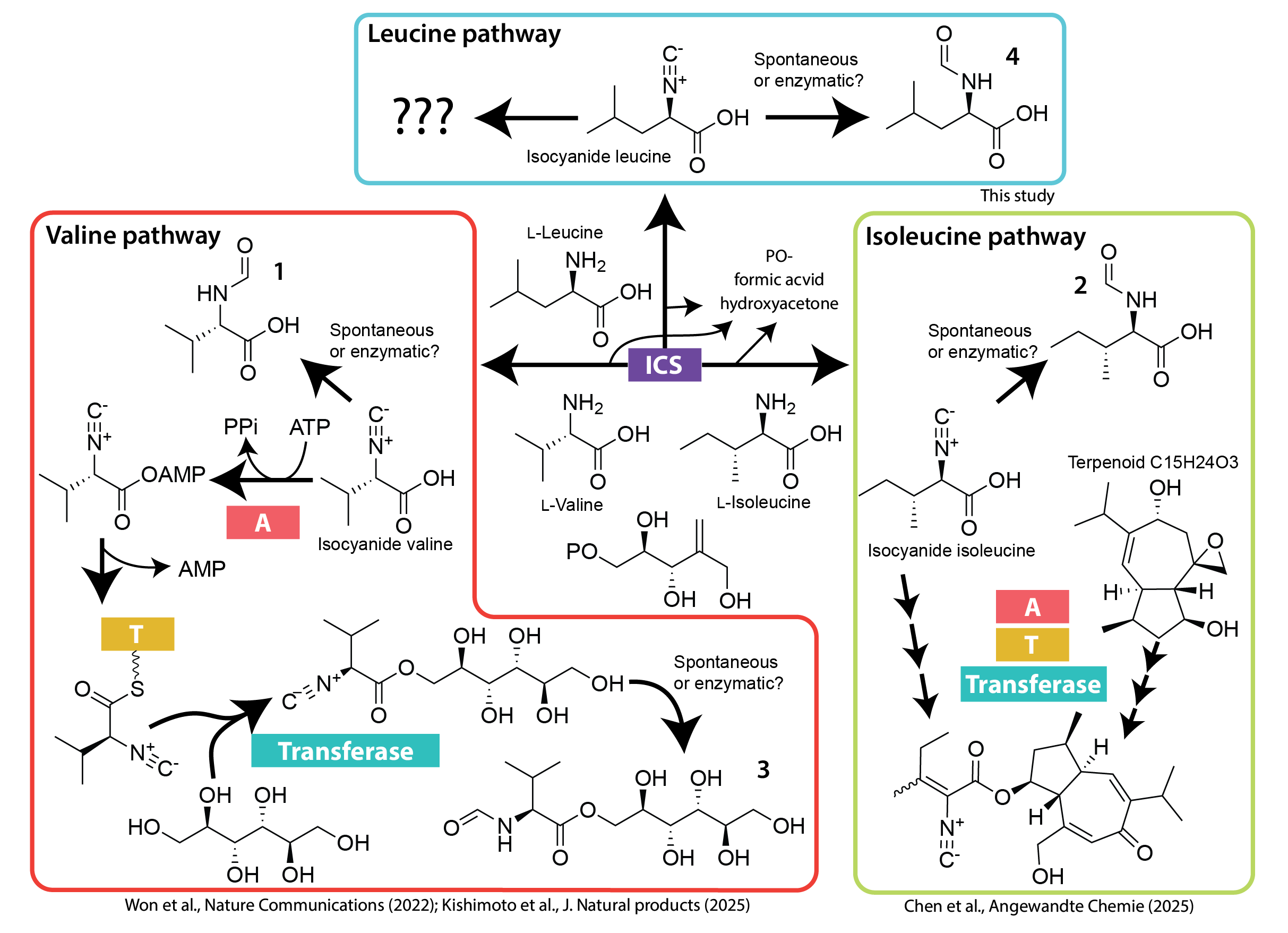
Fig. 3b from Nickles et al. (2026). Proposed fumicicolin A biosynthetic pathway, based in part on the proposed pinocicolin A pathway from Kishimoto et al. (2025) (recreated with permission) in addition to the findings from Chen et al. (2025).
Updated analysis of the crmA metabolic pathway
Fig. 3b from Nickles et al. (2026). Proposed fumicicolin A biosynthetic pathway, based in part on the proposed pinocicolin A pathway from Kishimoto et al. (2025) (recreated with permission) in addition to the findings from Chen et al. (2025).
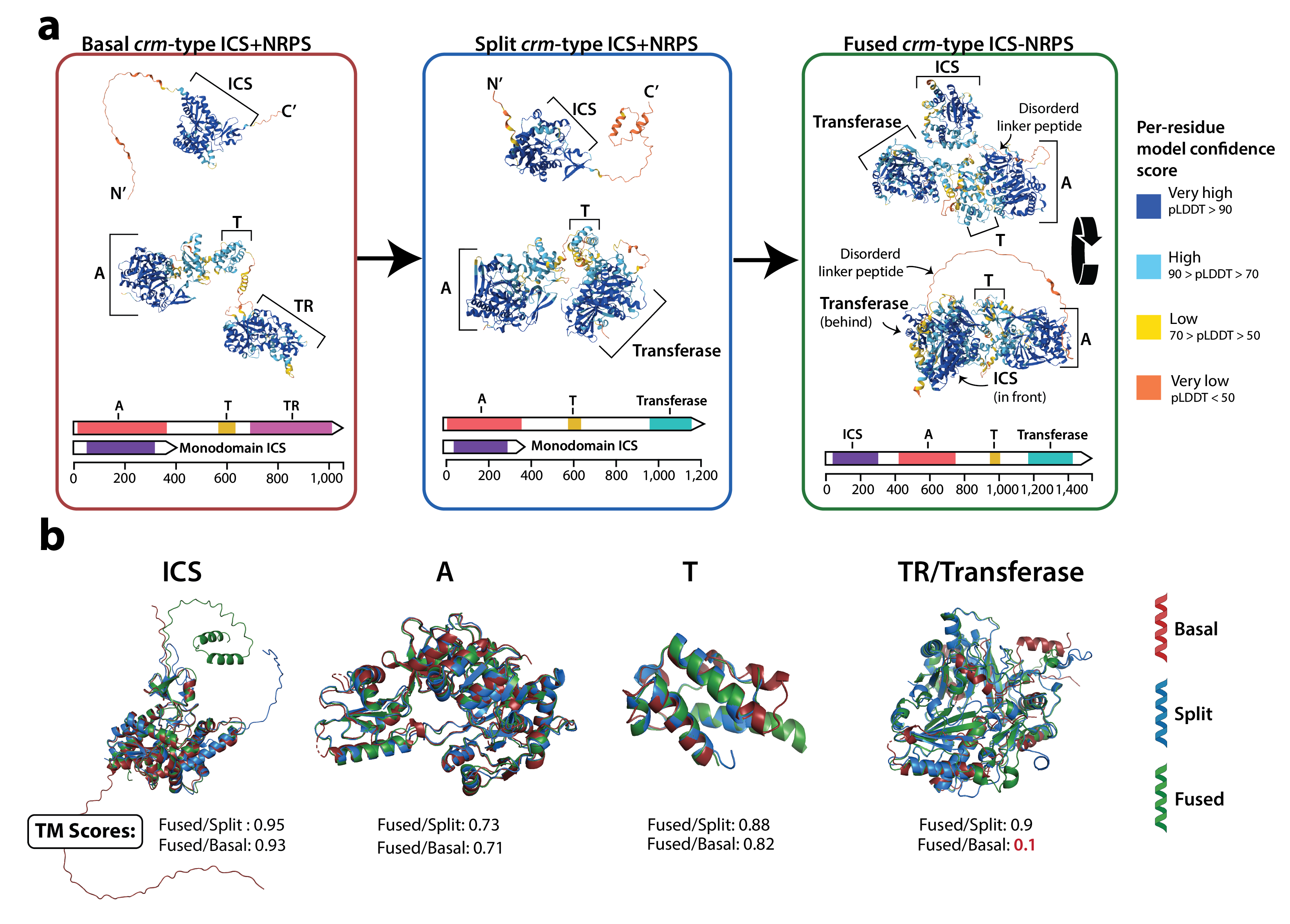
Fig. 5 from Nickles et al. (2026). Proposed evolutionary model for the CrmA metabolic pathway, with supporting structural alignments of CrmA domains. (a) Protein structures are colored with the per-residue model confidence score. The evolutionary model depicts three stages. The proposed ancestral 'basal' state, Type C, consists of separate ICS and NRPS-like proteins and notably has a thioester reductase (TR) domain on the C-terminus. The split Type A architecture has a C-terminal transferase and is hypothesized to have evolved from Type C via full replacement of the TR domain for the transferase. Finally, the fused Type A architecture is hypothesized to have arisen via a gene fusion event within an ancestral split Type A lineage. (b) Pairwise structural alignments of individual CrmA domains (ICS, A, T, and the C-terminal TR or Transferase domains). Each domain was extracted from the full-length protein models shown in 'a' and aligned separately. TM-scores, quantifying structural similarity, are provided for each indicated pairwise alignment (e.g., 'fused/split' compares the domain from the fused CrmA with that from the split Type A form). The aligned structures are colored as follows: basal-red; split-blue; fused-green.